Most motorcycle exterior components, including outer casings, protective panels and wind deflectors, are injection-molded from ABS and other high-quality plastic materials with complex curved profiles. After injection molding, edges and parting surfaces inevitably produce mold flash, burrs and injection protrusions. The quality of plastic parts grinding directly affects subsequent paint adhesion and the overall exterior aesthetics of motorcycles. These plastic parts feature thin wall thicknesses and irregular curved surfaces, making precision finishing highly challenging. The grinding process requires thorough removal of burrs and flash while completely avoiding scratches, deformation and edge damage to thin plastic workpieces.
Traditional finishing of motorcycle plastic components relies entirely on manual handheld tool polishing. With numerous curved surfaces, grooves and corner structures on motorcycle shells, manual grinding pressure is difficult to control stably. Workers often fail to clean residual burrs thoroughly or cause over-grinding and workpiece collapse due to excessive force, resulting in poor product consistency and high rework rates. In addition, plastic dust generated during processing creates harsh working environments. Labor shortages and high manual costs make traditional manual processing unable to meet mass production requirements for motorcycle plastic parts.
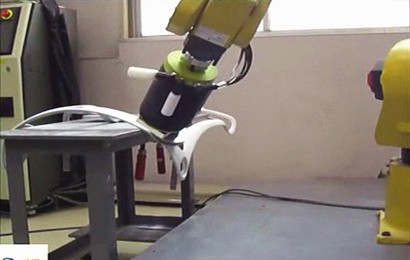
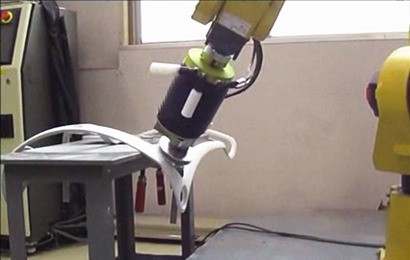
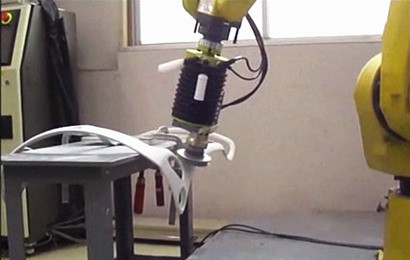
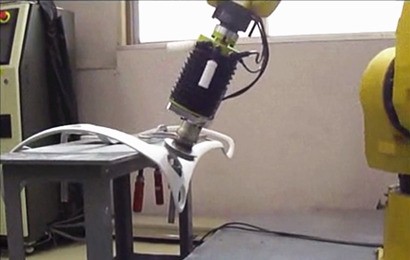
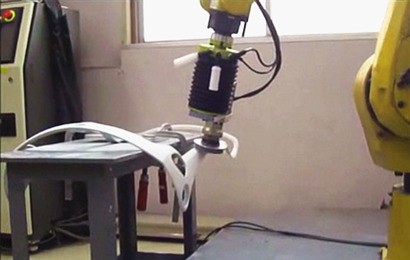
Solving the core processing pain points of motorcycle plastic cover parts, Truman has independently developed the professional motorcycle plastic parts grinding workstation. As reliable Truman grinding equipment, this intelligent grinding workstation realizes automatic deburring and surface pretreatment for motorcycle outer shells, protective panels and other injection-molded plastic parts before spraying.
Centered on an industrial robot grinding system, the workstation is equipped with a floating force-control grinding spindle and plastic-specific grinding heads optimized for thin plastic materials. After precise workpiece positioning and clamping, the robot accurately follows the complex curved contours of motorcycle plastic parts. The high-precision force control unit dynamically adjusts grinding pressure in real time and adaptively fits surface undulations. It efficiently removes mold flash, burrs and surface injection particles while effectively preventing thin-walled plastic parts from crushing, over-grinding and deformation, maintaining complete and intact workpiece shapes.
The customized fixture tooling boasts strong compatibility, supporting multiple styles of motorcycle plastic shells with simple and fast product switching and commissioning. Equipped with a fully enclosed dust removal system, the workstation effectively collects plastic grinding dust, controls dust diffusion and reduces workers’ direct contact with harmful dust.
This intelligent grinding solution reduces enterprises’ reliance on skilled grinding workers, stabilizes shell grinding quality and minimizes workpiece scrap and rework rates. It greatly improves production efficiency and production rhythm, providing the motorcycle manufacturing industry with a mature, stable and standardized intelligent finishing solution for injection-molded plastic parts.