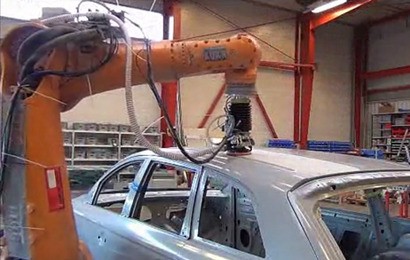
The automotive body-in-white is assembled by welding numerous sheet metal parts. Welding joints on the body side panels, door openings, sills and frame structures often produce excessive weld beads, welding slag and spatter. In addition, welding thermal deformation causes minor structural deviations on sheet metal surfaces. The quality of grinding and polishing for automotive body structures directly impacts paint adhesion, overall vehicle appearance, coating uniformity and final finished yield. Automotive body panels are thin-gauge sheet metals with complex curved surfaces, sharp corners and narrow inner areas, bringing extremely high processing difficulty. The finishing process requires complete removal of welding defects while strictly controlling material removal volume to avoid over-grinding, sheet penetration and irreversible body damage.
Traditional automotive body finishing depends entirely on manual handheld grinding tools. Vehicle bodies feature large surface areas and numerous hidden dead corners, making it impossible for workers to maintain consistent grinding force and trajectories. Manual operation frequently causes residual weld defects, local sheet metal perforation and uneven surface grinding textures, resulting in poor product consistency and high rework and scrap rates. In addition, grinding processes generate massive metal dust and loud noise, creating harsh and high-risk working environments. With high labor intensity, difficult recruitment of skilled polishers and rising labor costs, traditional manual processes can no longer meet the high-volume and standardized production cycles of mainstream automobile manufacturers.
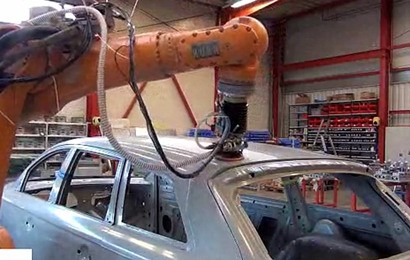
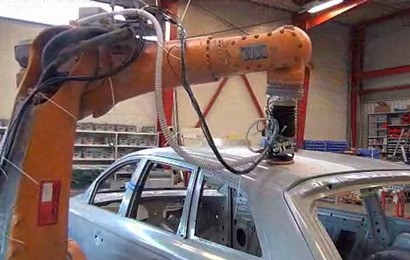
Addressing the universal pain points of body-in-white post-weld treatment, Truman independently developed the professional automotive body grinding and polishing workstation. As premiumTruman grinding equipment, this intelligent grinding workstation realizes full-automatic trimming and surface finishing for automotive body weld seams and welding spatter, providing high-standard surface pretreatment for subsequent painting processes.
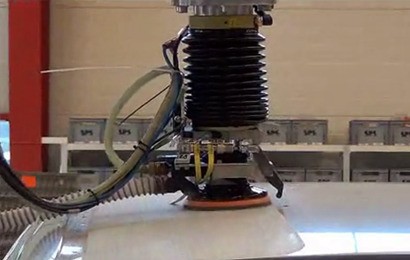
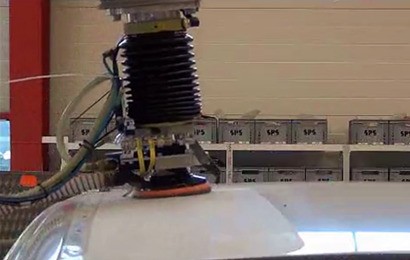
The workstation adopts multiple 6-axis industrial grinding robots as the core configuration, equipped with floating force-control grinding spindles and specialized polishing wheels for automotive sheet metal. After accurate overall positioning and clamping of the vehicle body, the robots intelligently adapt to the 3D body contour and perform precise grinding and polishing on side panels, door frames, sills and all splicing weld areas. The high-sensitivity floating force control unit dynamically adjusts contact pressure in real time, compensating for welding deformation and positioning errors. It stably adapts to flat surfaces, curved surfaces and R-angle corners, efficiently eliminating weld beads, slag and spatter. Strict material removal control effectively prevents thin sheet penetration, ensures smooth weld transition and uniform overall body surface quality.
The flexible positioning tooling system supports fast model switching for multiple vehicle types with simple and efficient commissioning. Equipped with a fully enclosed protective room and centralized dust collection system, the workstation thoroughly contains metal grinding dust, reduces on-site pollution and completely isolates workers from high-risk grinding operations.
This intelligent automotive finishing solution reduces automakers’ reliance on senior skilled grinding technicians, greatly stabilizes automotive body grinding and polishing quality and improves overall production efficiency. It significantly lowers sheet metal scrap and rework losses, providing the automotive industry with a mature, stable and reliable intelligent grinding workstation solution for body-in-white post-weld processing.